WhatsApp Broadcast vs SMS vs RCS Messaging: Complete Comparison Guide (2026)
Compare WhatsApp Broadcast, SMS, and RCS messaging across pricing, delivery rates, engagement, ROI, automation, and customer experience to choose the best communication channel for your business.

Sarah Chen
Thatmatters Team
Why Businesses Are Switching from SMS to WhatsApp and RCS
Over the last decade, business messaging has evolved from plain text messages to rich, interactive conversations. Customers today expect more than a notification—they want a seamless experience where they can view products, ask questions, receive instant support, and complete purchases without switching between multiple apps.
Three channels dominate business communication today:
* WhatsApp Broadcast
* Bulk SMS
* RCS (Rich Communication Services)
Each has its own strengths, pricing model, and ideal use cases. Choosing the right platform depends on your business goals, customer base, engagement requirements, and budget.
This guide compares WhatsApp Broadcast, SMS, and RCS across every important factor to help you make an informed decision.
What is WhatsApp Broadcast?
WhatsApp Broadcast allows businesses to send messages to multiple customers simultaneously using the WhatsApp Business Platform (API) while maintaining a personalized, one-to-one conversation experience.
Unlike group chats, recipients receive the message individually, allowing businesses to continue private conversations.
Businesses commonly use WhatsApp Broadcast for:
* Product launches
* Flash sales
* Festival offers
* Order updates
* Appointment reminders
* Payment confirmations
* Customer feedback
* Loyalty programs
* Abandoned cart recovery
* Re-engagement campaigns
When combined with automation, AI chatbots, and CRM integrations, WhatsApp Broadcast becomes a powerful customer engagement channel.
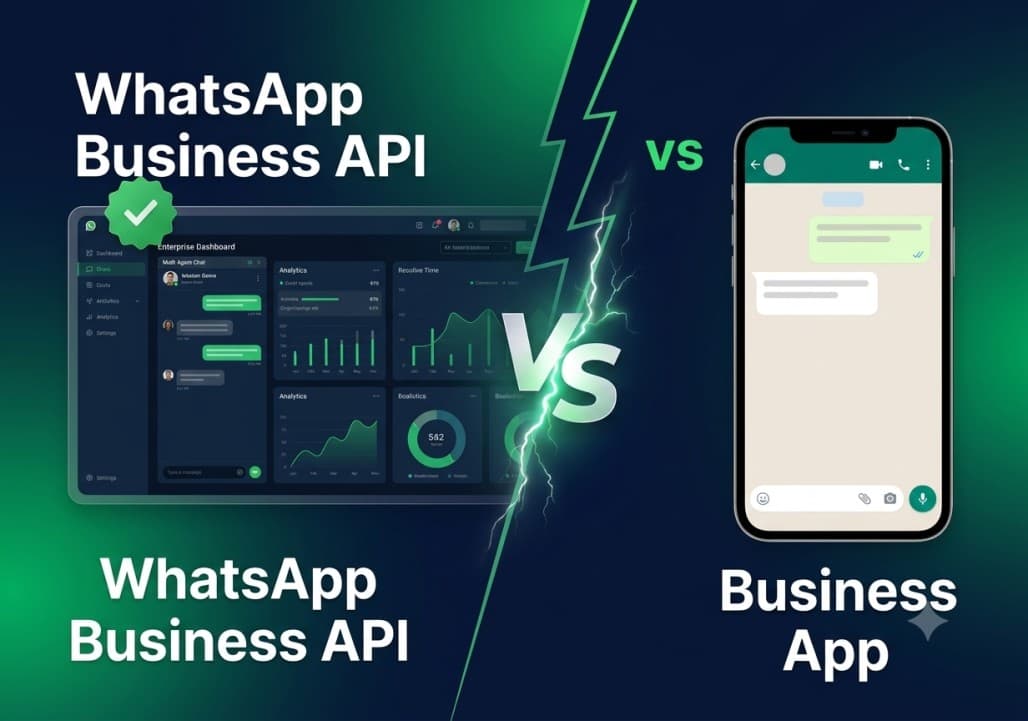
Related Reading: If you're new to the platform, learn the differences between the free app and the API in /blog/whatsapp-business-api-vs-app.
What is Bulk SMS?
Bulk SMS is one of the oldest digital marketing channels and remains widely used for transactional alerts and mass communication.
Businesses use SMS to send:
* OTPs
* Banking alerts
* Delivery notifications
* Promotional offers
* Emergency alerts
* Appointment reminders
The biggest advantage of SMS is its near-universal reach. Every mobile phone can receive SMS without requiring an internet connection or a specific application.
However, SMS is limited to plain text, lacks interactivity, and generally has lower engagement compared to modern messaging platforms.
What is RCS Messaging?
Rich Communication Services (RCS) is the next generation of SMS, designed to deliver app-like experiences directly inside the native messaging application on Android devices.
RCS supports features such as:
* High-resolution images
* Videos
* Carousels
* Suggested replies
* Action buttons
* Rich cards
* Branding with verified business profiles
* Read receipts
* Typing indicators
While RCS offers richer experiences than SMS, its availability depends on carrier support, device compatibility, and operating system adoption.
Evolution of Business Messaging
Business communication has progressed through several stages:
| Era | Primary Channel | Key Characteristics |
|---|---|---|
| 1990s | SMS | Simple text communication |
| 2000s | Long-form communication and newsletters | |
| 2010s | Mobile Apps | Personalized experiences within apps |
| 2020s | WhatsApp Business | Conversational, rich messaging |
| Emerging | RCS | Rich messaging within default messaging apps |
Today's customers expect instant, interactive conversations rather than one-way notifications.
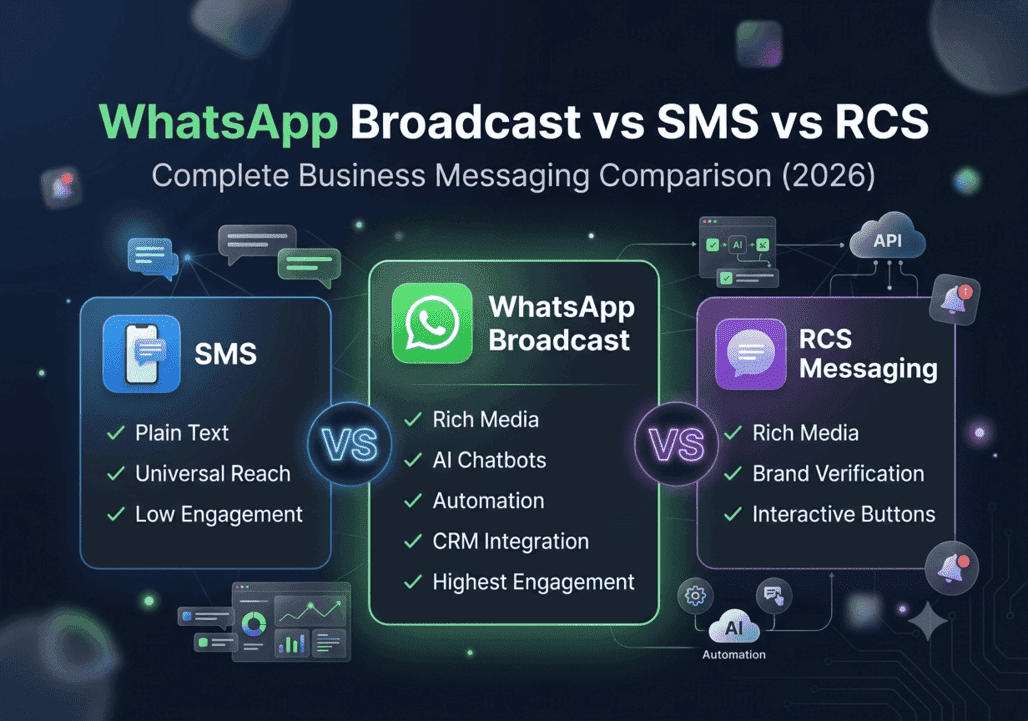
Feature Comparison
| Feature | WhatsApp Broadcast | Bulk SMS | RCS Messaging |
|---|---|---|---|
| Rich Media | ✅ | ❌ | ✅ |
| Images | ✅ | ❌ | ✅ |
| Videos | ✅ | ❌ | ✅ |
| PDFs | ✅ | ❌ | ✅ |
| Audio Messages | ✅ | ❌ | Limited |
| Interactive Buttons | ✅ | ❌ | ✅ |
| Quick Replies | ✅ | ❌ | ✅ |
| Read Receipts | ✅ | ❌ | ✅ |
| Typing Indicators | ✅ | ❌ | ✅ |
| AI Chatbots | ✅ | ❌ | Limited |
| CRM Integration | ✅ | Limited | ✅ |
| Analytics | Advanced | Basic | Moderate |
| Multi-Agent Support | ✅ | ❌ | Limited |
| End-to-End Encryption | ✅ | ❌ | ❌ |
| Customer Conversations | Two-way | Mostly one-way | Two-way |
| Global Reach | Excellent | Excellent | Growing |
Key Takeaway: WhatsApp provides the richest feature set for customer engagement, while SMS remains unmatched for universal reach. RCS sits between the two, offering richer experiences where supported.
Pricing Comparison
Pricing is a major consideration when choosing a messaging platform.
WhatsApp Broadcast
Costs typically include:
* Meta messaging charges
* Business Solution Provider (BSP) fees
* Optional platform subscription
* AI chatbot or automation costs
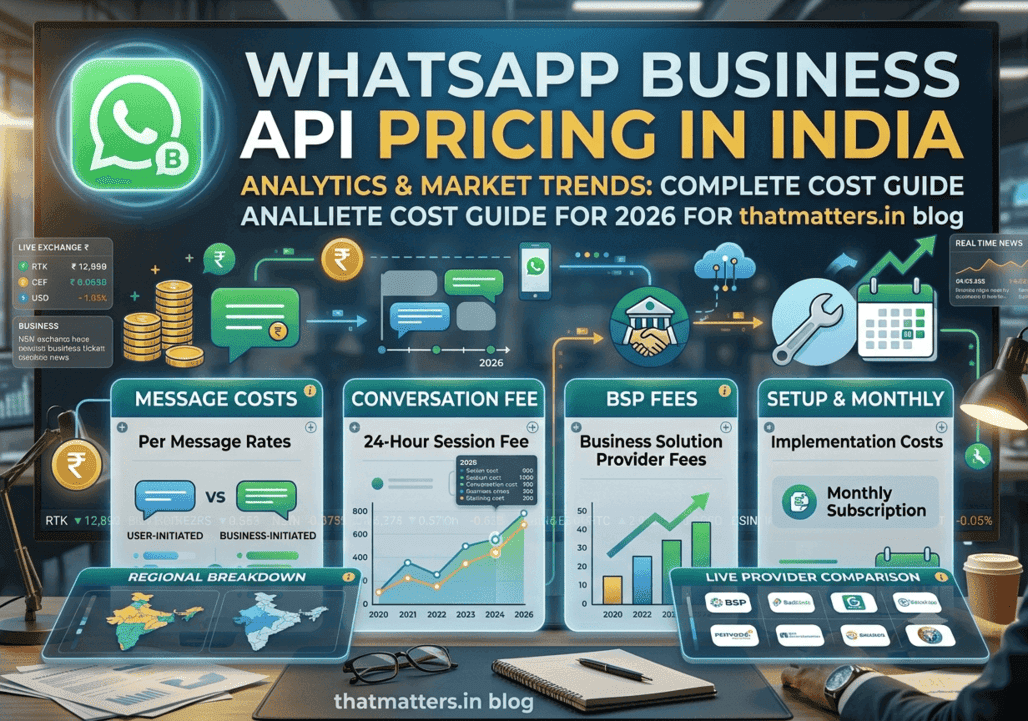
For a detailed breakdown, see /blog/whatsapp-business-api-pricing-india-2026.
Bulk SMS
Pricing is generally based on:
* Cost per SMS
* DLT registration (India)
* Sender ID
* Volume discounts
Bulk SMS can be cost-effective for simple notifications but lacks the engagement features of richer channels.
RCS Messaging
RCS pricing varies by provider and region. Costs may depend on:
* Message type
* Rich media usage
* Carrier agreements
* Platform provider
Because RCS is still evolving, pricing models are less standardized than SMS or WhatsApp.
Delivery Rates
Successful message delivery depends on the channel, customer device, and network conditions.
| Platform | Typical Delivery Reliability |
|---|---|
| SMS | Very High |
| High (subject to opt-in and compliance) | |
| RCS | Moderate to High (device/carrier dependent) |
SMS benefits from broad compatibility, while WhatsApp and RCS require users to have compatible apps or devices and appropriate permissions.
Open Rate Comparison
One of the biggest differences between these channels is how often customers actually open and read messages.
| Channel | Typical Engagement Trend |
|---|---|
| Very High | |
| SMS | Moderate |
| Lower than messaging apps in many campaigns | |
| RCS | High where supported |
WhatsApp's conversational interface and familiar user experience often contribute to stronger engagement than traditional messaging channels.
Customer Experience
Modern customers value convenience and speed.
* Rich conversations
* Instant replies
* AI support
* File sharing
* Product catalogs
* Secure communication
SMS
* Simple alerts
* Universal compatibility
* Limited interaction
RCS
* Interactive experiences
* Rich media
* Branded messages
* Improved customer journeys on supported devices
Which Channel Should You Choose?
The answer depends on your business objectives.
* Choose WhatsApp Broadcast if you need personalized conversations, automation, AI chatbots, sales campaigns, or customer support.
* Choose Bulk SMS for time-sensitive alerts, OTPs, or reaching users without internet access.
* Choose RCS if your audience primarily uses supported Android devices and you want richer messaging without requiring a separate app.
Related Articles
Want to learn more about WhatsApp Business, automation, and customer engagement? Explore these in-depth guides:
- 📘 WhatsApp Business API vs WhatsApp Business App: What's the Difference? — Understand the key differences between the free WhatsApp Business App and the WhatsApp Business API, and discover which solution is right for your business.
- 💰 WhatsApp Business API Pricing in India (2026): Complete Cost Guide — Learn everything about Meta pricing, BSP charges, message costs, pricing examples, and ROI calculations before choosing a WhatsApp Business provider.
- 🚀 WhatsApp Lead Generation Automation: Convert More Leads Automatically — Discover how businesses automate lead capture, qualification, nurturing, and follow-ups using WhatsApp automation.
- 🤖 24/7 Customer Support with AI on WhatsApp — Learn how AI-powered WhatsApp chatbots provide instant customer support, reduce response times, and improve customer satisfaction.
- 📈 How AI WhatsApp Chatbots Convert 3× More Leads — Explore how AI-driven conversations, personalized messaging, and intelligent automation help businesses increase conversions and sales.
- ✅ Verified WhatsApp Templates Approval Guide (2026) — Follow this step-by-step guide to create, submit, and get your WhatsApp message templates approved quickly while avoiding common rejection reasons.
Share this article
Related articles

FIFA World Cup 2026 Winner: Spain Defeats Argentina 1-0 in Final | Full Match Details
Jul 19, 2026